This film follows Dr Grace Kodindo an Obstetrician known across the world for her fight to stop women dying unnecessarily in pregnancy and childbirth. She is a leading advocate of reproductive health care and rights, as she explores what help is available for the people affected by ongoing bloody conflict in the Democratic Republic of Congo.

Feb 1, 2011


Jan 25, 2011
Nov 15, 2010
Throwing out the lies with the birth water.
A 1 hour documentary about birth and upcoming legislation in Australia that will threaten basic human rights. This is the story of a woman who chooses to birth at home. We see the network of community in the Blue Mountains that surrounds her before during and after her birth. We see what is at stake. Woman's choice.
Oct 25, 2010
Breech Vaginal Birth (podalic presentation)
This very calm and methodical video shot in Ecuador, South America, truly displays the humanization of birth. Enjoy!!!
Sep 16, 2010
World Breastfeeding Challenge 2010 in Toronto

On October 3rd of last year mothers and babies worldwide competed to set the record for the most babies breastfeeding at one time. In Toronto 190 moms and 191 hungry infants and toddlers gathered at the Rosedale Heights School of the Arts with family and friends to participate. Another 182 moms and babies participated online for a total of 372 moms and 373 babies all breastfeeding at the same time. Toronto placed first out of 298 participating sites worldwide for the most children breastfeeding at one time. Congratulations Toronto!
On October 2, 2010 mothers and babies around the world will once again compete to set the record for the most children breastfeeding at one time. Breastfeeding mothers and babies are invited to participate and help Toronto once again win the challenge.
Date: Saturday, October 2, 2010
Time: 10:00 a.m. - 1:00 p.m.
Place: Rosedale School for the Arts
711 Bloor Street East (Castle Frank Subway)
For more information on sites registered for this year's challenge
http://www.babyfriendly.ca/challenge/challenge_region-sites_36_4.aspx
Sep 10, 2010
A Breech in The System

A BREECH IN THE SYSTEM. A woman wants to give birth to her breech baby in a hospital. They say she has to have a caesarean section. This is an inspiring documentary about her to attempt to birth naturally against all odds.
Karin Ecker’s interest in social issues has brought her international credits for her filmmaking plus photographic art. From filming European children exploring environmental issues in the Bahamas to physically handicapped people scuba diving in the Egyptian Sea, she now brings her lens to the issue of childbirth choices in Australia.
"She intends to use this film as a tool to support the voice of ‘woman’.
Prepare to be moved by this intelligent and poignant film about one woman's birth journey with a breech pregnancy and breech birth. Experience the fear, anticipation, support and birth outcomes when you are clear about your boundaries and in touch with your inner voice in pregnancy. The role that care givers have in a woman's birth is highlighted beautifully, ensuring this is must see film for all midwives, doulas and especially obstetricians.
This production is excellent making the film a joy to watch. I can best describe this film as a vital and stunning contribution for all humankind allowing us all to witness with absolute clarity the entry to our world of one human soul in a unique way."
Sep 9, 2010
A Wake- Up Story
A Wake-Up Story from Healthy Child Healthy World on Vimeo.
Healthy Child Healthy World exists because tens of millions of children now face chronic diseases and illnesses including cancer, autism, asthma, birth defects, ADD/ADHD, allergies, learning and developmental disabilities, as well as a host of lesser but disruptive ailments. Credible scientific evidence increasingly points to contaminants in our environments and toxic chemicals in everyday products as causing and contributing to many of these diseases.
For the past two decades Healthy Child Healthy World has been the nation's leading organization of its kind. We help millions of parents, educators, health professionals, and the general public take action to create healthy environments and embrace green, non-toxic steps.
Read more: http://healthychild.org/about/mission/#ixzz0z48pT0QG
Dangers of Ultrasound & Dopplers
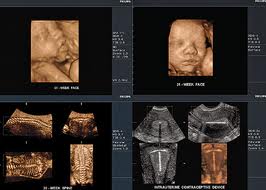
There should be a louder outcry about what I see as a growing epidemic. The routine application of ultrasound in normal pregnancy is considerably dangerous. Although most medical practitioners assure us that ultrasound presents no dangers, this procedure, which is used to study the body's internal organs with non-ionizing waves, has been the subject of research indicating some considerable risks.
There are countlesss studies that all testify to the concern over the use of ultrasound prebirth scanning. We only read about the dangers of these "safe" procedures years after they have been in use and have damaged an untold number of trusting patients. It's always unwise to assume that any form of energy that the human body has not been accilimated to for a million years, is safe, just because your Doctor says so.
These are a few articles on Doppler Danger...
"Don't stop researching when you find the answers you want. Please remember that there is absolutely no ethical way to PROVE that ultrasound, including dopplers, is safe for the unborn. Just based on how they respond to it, we need to stop shooting sound waves at babies."
http://articles.mercola.com/sites/articles/archive/2001/12/19/ultrasound.aspx?aid=CD945
http://douglassreport.com/2004/05/28/negative-effects-of-ultra-sounds/
http://aamishop.com/index.php?main_page=product_info&cPath=8&products_id=155
http://midwiferytoday.com/articles/ultrasoundrodgers.asp
http://www.midwiferytoday.com/articles/ultrasound.asp
http://www.jultrasoundmed.org/
http://www.sciencedaily.com/releases/2010/08/100817161100.htm
http://www.telegraph.co.uk/news/uknews/1364783/Ultrasound-scans-linked-to-brain-damage-in-babies.html
http://www.plus-size-pregnancy.org/Prenatal%20Testing/prenataltest-ultrasoundsafety.htm
http://www.themidwifenextdoor.com/?p=410
http://www.youtube.com/watch?v=mZDinmnt60s
http://www.sciencedaily.com/releases/2010/03/100315103808.htm
http://www.birth.com.au/Ultrasounds/Physical-effects-and-research.aspx?p=1
http://www.naturalnews.com/028853_ultrasound_fetus.html
http://www.youtube.com/watch?v=YfaUQCp6L1s
http://www.kindredcommunity.com/articles/ultrasound-scans-cause-for-concern/p/1279
http://www.greenhealthwatch.com/newsstories/newslatest/latest0701/ultrasound-hurt.html
http://authenticmidwiferyeducationfromaami.blogspot.com/2009/09/high-tech-midwifery-i-wrote-for.html
http://www.ob-ultrasound.net/history1.html
http://www.planetc1.com/cgi-bin/n/v.cgi?c=1&id=1155156248
http://www.aims.org.uk/Journal/Vol11No4/ultra2.htm
http://onlinelibrary.wiley.com/doi/10.1002/uog.6381/abstract
http://www.articlesnatch.com/Article/Is-Pregnancy-Ultrasound-Risky-/56304
http://www.birth.com.au/Ultrasounds/Physical-effects-and-research.aspx?p=1
http://www.joyousbirth.info/forums/showthread.php?t=71
Aug 31, 2010
Great events for moms like you!
Exercise during pregnancy and postpartum
Come join us and find out what you can and cannot do regarding exercise during pregnancy and postpartum. Risks and benefits will be reviewed, guidelines and the importance of core strength (Ab Rehab).
Part 1 (Pregnancy) Sept 21st. 10:15am-11:15am
Part 2 (Postpartum) Sept 28th. 10:15am-11:15am
Little Bird Fly - Junction
2955 Dundas Street West
647-348-3443
littlebirdfly@hotmail.com
$10 per person. Space is limited
Everything you wanted to know about exercise AND nutrition during pregnancy and postpartum
Are you pregnant and unsure on what is considered safe to do during pregnancy? Do you feel nauseated at the thought of your favorite foods but want to make sure the baby is getting the nutrients needed?
Or are you a new mom and not sure what to do as far as exercise and if it's too soon? Are you frustrated that you seemed to have plateaued with your exercise routine? Are you bloated, exhausted and just too pooped to think about "what's for dinner honey"???
Then these workshops are for you!
Part 1 (Pregnancy) Sept 21st 7:00pm-8:30pm
Part 2 (Postpartum) Sept 28th 7:00pm-8:30pm
Whole Foods Market - Yorkville
87 Avenue Rd
416-944-0500 ext 0
$10 per person. Space is limited
Fertility, pregnancy and beyond
We have gathered the leading experts in one place to deliver much needed information and answer questions to women who are looking to get pregnant or who are already expecting.
Topics include:
Samantha Montpetit-Huynh, CPTN-CPT, PFS, NWS, RAB
Exercise for fertility and pregnancy
Kerri Cooper, B.Sc, CNP
Nutrition to help conceive and maintain a healthy pregnancy
Dr. Marjorie Dixon, MD, FRCS(C), FACOG
Fertility. What is IVF and what can you expect with fertility treatments
Wendy Welch, RN.
The benefits of banking your childs umbilical cord blood
Carla Parchment, Labour & Postpartum Doula
What IS a Doula anyway?? What types of services do they provide? Prenatal or postpartum?
This information event gives you all the answers in one place. So if you are thinking about getting pregnant, trying or already pregnant, this is the place for you.
October 2nd 10am-12noon. Refreshments will be served.
Insception Cord Blood Program
1620 Tech Avenue, Mississauga
905-206-2790
geralynochab@insception.com
$20 per person. Space is limited
Ab Rehab - Group style!
Do YOU suffer from Mummy Tummy?
Are you sick and tired of people asking you if you're pregnant when when your youngest baby is over a year old? Have you lost all your pregnancy weight but can't get rid of that stubborn belly?
If so, you may be suffering from Diastasis Recti or in laymans terms, separation of the rectus abdominis.
...
In this hands on workshop, you will learn step by step how to assess yourself and be given one-on-one instruction on specific exercises to help strengthen your core muscles and encourage the rectus back together. We will review the modifications required and what to avoid to ensure you don't make it worse. We will teach you how to close that separation and get rid of that belly for good.
This program is designed within the Ab Rehab protocol and will be given on three separate dates. 2 hours each. October 8, 29 and November 19th.
elements for Women
2532 Yonge St, Toronto
416-482-4900
carmen@elementsto.com
$250.00 + tax for non-members
$199.00 + tax for elements members
Space limited to 15 participants
*Note: Participants will receive 15% off products
To register: contact the location where it's provided or email at info@coreexpectations.com
Come join us and find out what you can and cannot do regarding exercise during pregnancy and postpartum. Risks and benefits will be reviewed, guidelines and the importance of core strength (Ab Rehab).
Part 1 (Pregnancy) Sept 21st. 10:15am-11:15am
Part 2 (Postpartum) Sept 28th. 10:15am-11:15am
Little Bird Fly - Junction
2955 Dundas Street West
647-348-3443
littlebirdfly@hotmail.com
$10 per person. Space is limited
Everything you wanted to know about exercise AND nutrition during pregnancy and postpartum
Are you pregnant and unsure on what is considered safe to do during pregnancy? Do you feel nauseated at the thought of your favorite foods but want to make sure the baby is getting the nutrients needed?
Or are you a new mom and not sure what to do as far as exercise and if it's too soon? Are you frustrated that you seemed to have plateaued with your exercise routine? Are you bloated, exhausted and just too pooped to think about "what's for dinner honey"???
Then these workshops are for you!
Part 1 (Pregnancy) Sept 21st 7:00pm-8:30pm
Part 2 (Postpartum) Sept 28th 7:00pm-8:30pm
Whole Foods Market - Yorkville
87 Avenue Rd
416-944-0500 ext 0
$10 per person. Space is limited
Fertility, pregnancy and beyond
We have gathered the leading experts in one place to deliver much needed information and answer questions to women who are looking to get pregnant or who are already expecting.
Topics include:
Samantha Montpetit-Huynh, CPTN-CPT, PFS, NWS, RAB
Exercise for fertility and pregnancy
Kerri Cooper, B.Sc, CNP
Nutrition to help conceive and maintain a healthy pregnancy
Dr. Marjorie Dixon, MD, FRCS(C), FACOG
Fertility. What is IVF and what can you expect with fertility treatments
Wendy Welch, RN.
The benefits of banking your childs umbilical cord blood
Carla Parchment, Labour & Postpartum Doula
What IS a Doula anyway?? What types of services do they provide? Prenatal or postpartum?
This information event gives you all the answers in one place. So if you are thinking about getting pregnant, trying or already pregnant, this is the place for you.
October 2nd 10am-12noon. Refreshments will be served.
Insception Cord Blood Program
1620 Tech Avenue, Mississauga
905-206-2790
geralynochab@insception.com
$20 per person. Space is limited
Ab Rehab - Group style!
Do YOU suffer from Mummy Tummy?
Are you sick and tired of people asking you if you're pregnant when when your youngest baby is over a year old? Have you lost all your pregnancy weight but can't get rid of that stubborn belly?
If so, you may be suffering from Diastasis Recti or in laymans terms, separation of the rectus abdominis.
...
In this hands on workshop, you will learn step by step how to assess yourself and be given one-on-one instruction on specific exercises to help strengthen your core muscles and encourage the rectus back together. We will review the modifications required and what to avoid to ensure you don't make it worse. We will teach you how to close that separation and get rid of that belly for good.
This program is designed within the Ab Rehab protocol and will be given on three separate dates. 2 hours each. October 8, 29 and November 19th.
elements for Women
2532 Yonge St, Toronto
416-482-4900
carmen@elementsto.com
$250.00 + tax for non-members
$199.00 + tax for elements members
Space limited to 15 participants
*Note: Participants will receive 15% off products
To register: contact the location where it's provided or email at info@coreexpectations.com
Aug 30, 2010
All Women Need Antibiotics One Hour Before Cesarean Delivery
As cited, all pregnant women should be given antibiotics before having a cesarean delivery to help prevent infections, according to new recommendations issued today by The American College of Obstetricians and Gynecologists. The College says that the antibiotics should be given within one hour of the start of surgery for maximum effectiveness.
Infection is the most common complication of cesarean delivery and can occur in 10% to 40% of women who have a cesarean compared with 1% to 3% of women who deliver vaginally. Although antibiotics have been given to women having cesareans to reduce their risk of postoperative infections, they have generally been given after the baby was born and the umbilical cord was clamped. This was based on concern that the antibiotics that made it into the baby's bloodstream from the mother would interfere with newborn lab tests or could lead to antibiotic-resistant infections.
"Based on the latest data, prophylactic antibiotics given to pregnant women before a cesarean significantly reduce maternal infection and do not appear to harm newborns," said William H. Barth, Jr, MD, chair of The College's Committee on Obstetric Practice. "We're recommending that all women who undergo cesarean get a preventive course of antibiotics before the surgery starts. Ideally, this should happen within 60 minutes of surgery." An exception to this, Dr. Barth noted, are pregnant women who are already taking appropriate antibiotics for another problem, such as chorioamnionitis (infection of the membranes surrounding the fetus). Women who need an emergency cesarean should be given antibiotics as soon as possible.
"Anytime you have invasive surgery, you have an increased risk of developing an infection at the incision site," said Dr. Barth. This new recommendation should help reduce the overall rate of cesarean-related infections, Dr. Barth added.
Committee Opinion #465, "Antimicrobial Prophylaxis for Cesarean Delivery: Timing of Administration," is published in the September 2010 issue of Obstetrics & Gynecology.
Infection is the most common complication of cesarean delivery and can occur in 10% to 40% of women who have a cesarean compared with 1% to 3% of women who deliver vaginally. Although antibiotics have been given to women having cesareans to reduce their risk of postoperative infections, they have generally been given after the baby was born and the umbilical cord was clamped. This was based on concern that the antibiotics that made it into the baby's bloodstream from the mother would interfere with newborn lab tests or could lead to antibiotic-resistant infections.
"Based on the latest data, prophylactic antibiotics given to pregnant women before a cesarean significantly reduce maternal infection and do not appear to harm newborns," said William H. Barth, Jr, MD, chair of The College's Committee on Obstetric Practice. "We're recommending that all women who undergo cesarean get a preventive course of antibiotics before the surgery starts. Ideally, this should happen within 60 minutes of surgery." An exception to this, Dr. Barth noted, are pregnant women who are already taking appropriate antibiotics for another problem, such as chorioamnionitis (infection of the membranes surrounding the fetus). Women who need an emergency cesarean should be given antibiotics as soon as possible.
"Anytime you have invasive surgery, you have an increased risk of developing an infection at the incision site," said Dr. Barth. This new recommendation should help reduce the overall rate of cesarean-related infections, Dr. Barth added.
Committee Opinion #465, "Antimicrobial Prophylaxis for Cesarean Delivery: Timing of Administration," is published in the September 2010 issue of Obstetrics & Gynecology.
Aug 21, 2010
This Woman's Work
... a three year journey that took this couple from their unexpected hospital cesarean birth to birthing their second baby at home in water - condensed into a mere 6-minute video. You, the viewer, become a witness to their very heartfelt, personal sacrifice and transformation.
Copyright 2010 Patti Ramos. All rights reserved.
www.doulapattiramos.com
The song "This Woman's Work" - written by Kate Bush and performed by Maxwell. Copyright 1990 EMI
Aug 19, 2010
How NOT to bathe the baby (baby's first bath)
A public awareness reminder that things that happen behind the scenes, out of our sight, aren't always as rosy as we might think them to be. Perhaps its a restaurant cook who accidentally drops your burger on the floor before placing it on the bun and serving it to you.
Here it's an overworked apathetic (pathetic) nurse giving a newborn her first bath. Please comment and rate this video, so as to insure that it is viewed as widely as possible, perhaps to prevent other such abuse.
This is why a new mom or dad should never let the newborn out of their sight!!! Always accompany your infant if necessary.
Here it's an overworked apathetic (pathetic) nurse giving a newborn her first bath. Please comment and rate this video, so as to insure that it is viewed as widely as possible, perhaps to prevent other such abuse.
This is why a new mom or dad should never let the newborn out of their sight!!! Always accompany your infant if necessary.
Aug 17, 2010
Baby’s First Bacteria Depend on Birth Route - US News and World Report
Baby’s First Bacteria Depend on Birth Route - US News and World Report
It’s the journey, not the destination,that determines the quality of bacteria a newborn encounters in life’s first moments.
A new survey finds that babies born via cesarean section had markedly different bacteria on their skin, noses mouths and rectums than babies born vaginally. The research adds to evidence that babies born via C-section may miss out on beneficial bacteria passed on by their mothers.
“We know from lots and lots of other ecosystems that how you set up the house has a real impact for all the later guests,” says medical microbiologist David Relman of the Stanford University School of Medicine, who was not involved in the study.
Previous research suggests that babies born via C-section are more likely to develop allergies, asthma and other immune system–related troubles than are babies born the traditional way. The new study, to be published online the week of June 21 in the Proceedings of the National Academy of Sciences, offers a detailed look at the early stages of the body’s colonization by microbes, critters that shape the developing immune system, help extract nutrients from food and keep harmful microbes at bay.
Babies born vaginally were colonized predominantly by Lactobacillus, microbes that aid in milk digestion, the research team from the University of Puerto Rico, the University of Colorado in Boulder and two Venezuelan institutes report. The C-section babies were colonized by a mixture of potentially nasty bacteria typically found on the skin and in hospitals, such as Staphylococcus and Acinetobacter.
The new work may improve understanding of the early immune system, says Gary Huffnagle of the University of Michigan in Ann Arbor. While C-sections can be lifesaving in some cases, the procedure appears to shift a baby’s first bacterial community. A better understanding of this early colonization, which is also influenced by events such as breast-feeding, may lead to medical practices for establishing healthy bacterial colonization.
“This isn’t damning the C-section, but it may be important to make sure your child gets a mouthful of vaginal material,” says Huffnagle.
The study included nine women and their 10 newborns (including one set of twins) born at the Puerto Ayacucho Hospital in the state of Amazonas, Venezuela. The mothers’ skin, mouths and vaginas were sampled an hour before delivery. Babies’ mouths and skin were swabbed immediately after birth, and their rectums were swabbed after their first bowel movement. DNA analysis revealed that the four babies born vaginally carried bacterial populations that matched those of their mothers’ vaginas, while the C-section babies had a more generic mixture of skin bacteria, similar to that found on the skin of all the moms.
“The vaginal birth was like a fingerprint of mom,” says study coauthor María Domínguez-Bello of the University of Puerto Rico in San Juan.
First-comers to the body are critical for establishing the microbial scene, says pediatrician Josef Neu of the University of Florida in Gainesville. “It’s like a garden where few, if any, seeds have been planted. If you push in one direction you might get a lot of weeds, a lack of diversity,” Neu says. “That can be associated with immune system problems.”
Some work suggests colonization may begin even earlier. While the paradigm has been that babies are sterile until birth, Neu’s recent work found a microbial community already dwelling in the first poop of some babies born prematurely. While a baby is in the uterus, it typically swallows 400 to 500 milliliters of amniotic fluid, which may harbor some of the mother’s microbes, Neu speculates.
It’s the journey, not the destination,that determines the quality of bacteria a newborn encounters in life’s first moments.
A new survey finds that babies born via cesarean section had markedly different bacteria on their skin, noses mouths and rectums than babies born vaginally. The research adds to evidence that babies born via C-section may miss out on beneficial bacteria passed on by their mothers.
“We know from lots and lots of other ecosystems that how you set up the house has a real impact for all the later guests,” says medical microbiologist David Relman of the Stanford University School of Medicine, who was not involved in the study.
Previous research suggests that babies born via C-section are more likely to develop allergies, asthma and other immune system–related troubles than are babies born the traditional way. The new study, to be published online the week of June 21 in the Proceedings of the National Academy of Sciences, offers a detailed look at the early stages of the body’s colonization by microbes, critters that shape the developing immune system, help extract nutrients from food and keep harmful microbes at bay.
Babies born vaginally were colonized predominantly by Lactobacillus, microbes that aid in milk digestion, the research team from the University of Puerto Rico, the University of Colorado in Boulder and two Venezuelan institutes report. The C-section babies were colonized by a mixture of potentially nasty bacteria typically found on the skin and in hospitals, such as Staphylococcus and Acinetobacter.
The new work may improve understanding of the early immune system, says Gary Huffnagle of the University of Michigan in Ann Arbor. While C-sections can be lifesaving in some cases, the procedure appears to shift a baby’s first bacterial community. A better understanding of this early colonization, which is also influenced by events such as breast-feeding, may lead to medical practices for establishing healthy bacterial colonization.
“This isn’t damning the C-section, but it may be important to make sure your child gets a mouthful of vaginal material,” says Huffnagle.
The study included nine women and their 10 newborns (including one set of twins) born at the Puerto Ayacucho Hospital in the state of Amazonas, Venezuela. The mothers’ skin, mouths and vaginas were sampled an hour before delivery. Babies’ mouths and skin were swabbed immediately after birth, and their rectums were swabbed after their first bowel movement. DNA analysis revealed that the four babies born vaginally carried bacterial populations that matched those of their mothers’ vaginas, while the C-section babies had a more generic mixture of skin bacteria, similar to that found on the skin of all the moms.
“The vaginal birth was like a fingerprint of mom,” says study coauthor María Domínguez-Bello of the University of Puerto Rico in San Juan.
First-comers to the body are critical for establishing the microbial scene, says pediatrician Josef Neu of the University of Florida in Gainesville. “It’s like a garden where few, if any, seeds have been planted. If you push in one direction you might get a lot of weeds, a lack of diversity,” Neu says. “That can be associated with immune system problems.”
Some work suggests colonization may begin even earlier. While the paradigm has been that babies are sterile until birth, Neu’s recent work found a microbial community already dwelling in the first poop of some babies born prematurely. While a baby is in the uterus, it typically swallows 400 to 500 milliliters of amniotic fluid, which may harbor some of the mother’s microbes, Neu speculates.
A book review: Bearing Witness Childbirth Stories Told by Doulas

Lisa Doran ND and Lisa Caron CD(DONA) PCD(DONA) are thrilled to announce that thier anthology, the first of it's kind,
Bearing Witness: Childbirth Stories Told by Doulas
has now been released and is available in print through Fox Womens Books in Canada and the US.
To purchase a copy you can come by Barefoot Health to pick one up, you can contact the authors or one of the contributors, you can support your local bookstore with a visit or they are also available online at Chapters.ca. Books are $19.95
Bearing Witness is a collection of stories and poems written by birth doulas sharing their perspectives on childbirth as seen through the eyes of a doula. We've been incredibly fortunate to have wonderful and wise contributors share their experience, their knowledge and their vision and hopes for birth in North America.
Here is what's being said by the best of them:
Penny Simkin
Childbirth Educator, Birth Doula, and author of "The Birth Partner: A Complete Guide for Dads, Doulas, and All Other Labor Companions"
"If you want to get to know what birth doulas are all about, read Bearing Witness, a series of birth stories and poems by doulas and others that tell it all. The stories are touching, inspiring, joyous, sad, spell-binding, suspenseful, and frustrating. Most are written by doulas who are dedicated, reliable, resourceful, and diplomatic; they recognize their scope of practice and know how to work effectively within it to help women to a safe and satisfying birth as they define it. Some are written by burnt out, angry, frustrated birth activists who are sickened by mainstream maternity care as practiced today and who have little respect for the professionals who work within that system.
Taken as a whole, this book covers the joys and challenges of the birth doula's role in North America. It will help expectant parents know how doulas think and feel, and they may be helped to think about the qualities they most want in a doula. As doulas read this book, it will feel like sitting in a circle of doulas as they share the rewards and frustrations of their work. And for other maternity care professionals, this book reveals how doulas think and feel as they work side by side with caregiving staff who have more power and different responsibilities than the doula, but likely less knowledge and understanding of the woman's wishes, concerns, fears, strengths and weaknesses.
A gripping book written by the doulas themselves..."
Ina May Gaskin
Author, Spiritual Midwifery, Ina May's Guide to Childbirth, and Ina May's Guide to Breastfeeding.
"This lovely book of doula experiences is nourishing, inspiring, passionate, and wise. I recommend it highly and hope that it finds a wide audience."
Ricki Lake
Producer of "The Business of Being Born" and Co-Author of Your Best Birth
"A remarkable book full of courage and wisdom. Every labouring woman should have a doula at her side."
Murray Enkin
Family doctor, obstetrician, childbirth educator, clinical epidemiologist, professor, senior author, A Guide to Effective Care in Pregnancy and Childbirth, now retired from all and enjoying life.
"Birth narratives provide a vital perspective, often quite different from, and sometimes more valuable than, that provided by scientific evidence. The stories, poems, and dreams of the doulas who contributed to this book are truly fascinating. They supplement the birth narratives of mothers, midwives, and doctors, and add a new dimension to our understanding of the miracle of birth."
Barbara Harper
RN, CLD, CCCE Author, Gentle Birth Choices, Founder Waterbirth International
"Doulas provide care from their hearts as well as their hands and that is so evident in this transformational collection of stories that will make you cry, laugh out loud, and perhaps even make you angry as you identify with womens' tales of birth. Please read every story to better understand the "real" side of birth. There is healing and love in the pages of this book, which will eventually leave you with a message of hope."
Barbara Katz Rothman
Professor of Sociology, City University of New York and Visiting Professor, International Midwifery Pre-registration Program, Ryerson University. Katz Rothman's most recent book, co-authored with Wendy Simonds, is LABORING ON: BIRTH IN TRANSITION, Routledge, 2007.
"Doulas are in a perfect position to bear witness, to see what happens at birth -- they are present, institutionally powerless, but there to be with the woman no matter what. They see the good births and they stand by as obstetrical demands destroy the hope of a good birth. Listen to their voices carefully -- they have much to teach us."
Gayle Peterson, PhD
www.makinghealthyfamilies.com Director of Training, Prenatal Counseling and Birth Hypnosis. Author, An Easier Childbirth, Birthing Normally and Making Healthy Families.
"Childbirth is an ordeal of nature. It can be an empowering experience for a woman, or can be devastating. But it is not neutral. The doula accompanies a woman on this journey, assuring a more transformative, than negative outcome. These stories reflect the depth of caring and commitment that doulas provide, that has the potential to change lives."
Michael C. Klein
MD, CCFP, FAAP (Neonatal-Perinatal), FCFP, ABFP, FCPS. Emeritus Professor of Family Practice and Pediatrics, University British Columbia & BC Children's & Women's Health Centre. Sr. Scientist Emeritus, Child & Family Research Institute. Director Clinician Scholar Program UBC Department of Family Practice
"This anthology of birth stories is just what we need as an antidote to birth as risky business or nothing more than an opportunity for unwanted side effects or as an accident waiting to happen. The authors are almost all doulas, with a smattering of artists and writers and other disturbers of the peace. The stories range from beautiful, transformative and poetic to horrible and associated with post-traumatic stress disorder. Throughout they have the ring of a deep truth and are positive even when troubling indeed. The doula is the central character and mediator in most of the stories and the "medical model" comes in for some serious, and well-deserved bashing. While the system of support for women in labor is in serious trouble, this powerful book contains the seeds for a rebirth of a movement one in which the woman with her supporters is at the center, while we professional caregivers are only there as facilitators. It is time for stories to replace statistics."
Jun 21, 2010
Ensure that no woman has to give birth alone.
With only a few days to go until the G8 leaders gather here in Canada, it is our last chance to make our voice heard - calling on G8 leaders to make firm commitments for increased resources for maternal, newborn and child health and to address the critical health worker gap.
Join the ONE campaign and sign a petition calling on G8 leaders to commit to recruit and train 3.5 million additional healthcare workers as part of a comprehensive package to help mothers and children in the developing world.
On behalf of nearly 15 million health workers, the International Confederation of Midwives, International Federation of Gynecology and Obstetrics, the International Council of Nurses, and the International Pediatricians Association join with the White Ribbon Alliance to urge the G8 to do more.
Help publicize the open letter by leading organizations and influential individuals, including Ai Tominaga, Angelique Kidjo, Annie Lennox, Claudia Winkleman, Celine Dion, Davina McCall, Diana Quick, Jarvis Church, Jermain Jenas, Dame Judi Dench, Joanna Lumley, Jully Black, June Sarpong, Kirstie Allsopp, Kristin Davis, Liya Kebede, Livia Firth, Margaret MacMillan, Mariella Frostrop, Mena Suvari, Minnie Driver, Maureen McTeer, Naomi Campbell, Rio Ferdinand, Scarlett Johansson, Wendi Murdoch. which calls on the G8 leaders to address this "global scandal."
Read the letter here and help spread the word: http://www.whiteribbonalliance.org/images/upload/G8-Letter-2010-English.pdf
May 20, 2010
New York midwives lose right to deliver babies at home.
Closure of hospital leaves practitioners without backing or insurance, driving home births underground.
As residents of the world's consumer capital, New Yorkers can have anything delivered to their door at any time. They can have their hair cut in the living room, have champagne and caviar rushed to them on a whim, enjoy a shiatsu massage in their own bed or invite a clairvoyant to predict their future from Tarot cards laid out on the kitchen table.
But there is one thing that is currently unavailable for delivery to those who live in this most can-do of metropolises. Women can not legally give birth at home in the presence of a trained and experienced midwife.
Continue reading...
Ed Pilkington in New York
guardian.co.uk, Friday 14 May 2010
As residents of the world's consumer capital, New Yorkers can have anything delivered to their door at any time. They can have their hair cut in the living room, have champagne and caviar rushed to them on a whim, enjoy a shiatsu massage in their own bed or invite a clairvoyant to predict their future from Tarot cards laid out on the kitchen table.
But there is one thing that is currently unavailable for delivery to those who live in this most can-do of metropolises. Women can not legally give birth at home in the presence of a trained and experienced midwife.
Continue reading...
Ed Pilkington in New York
guardian.co.uk, Friday 14 May 2010
May 19, 2010
"Your Period: It's Not Supposed to be a Pain"
"If you or a woman in your life suffer PMS or period pain, be sure to be at this presentation.
You will walk away with simple, effective tips to heal your PMS or period pain naturally!".
Event: Your Period: It's Not Supposed to be a Pain
Start Time: Wednesday, June 9 at 6:30pm
End Time: Wednesday, June 9 at 7:30pm
Where: Whole Foods - Yorkville
While almost every woman has experienced painful periods, they are not “normal”. Given our fast paced urban lifestyles and increased environmental toxin exposure, they are, however, increasingly common.
To counter this trend, we can be conscientious in our self-care. Our lifestyle and dietary choices play a central role in the dis/ease of our monthly flow, affecting both PMS and cramps.
Join Dr. Tanya Smith, TCM and Dr. Mahalia Freed, ND to learn why it hurts and how to resolve your menstrual discomfort. Embrace your monthly cycle with simple changes you can make today!
Registration is through Whole Foods (416-944-0500) and is $5. When you come to the workshop, Whole Foods will give you a $5 gift card.
For more info visit http://www.lifecycleswellness.com/Workshops/Period_Pain/Period_Pain.html
You will walk away with simple, effective tips to heal your PMS or period pain naturally!".
Event: Your Period: It's Not Supposed to be a Pain
Start Time: Wednesday, June 9 at 6:30pm
End Time: Wednesday, June 9 at 7:30pm
Where: Whole Foods - Yorkville
While almost every woman has experienced painful periods, they are not “normal”. Given our fast paced urban lifestyles and increased environmental toxin exposure, they are, however, increasingly common.
To counter this trend, we can be conscientious in our self-care. Our lifestyle and dietary choices play a central role in the dis/ease of our monthly flow, affecting both PMS and cramps.
Join Dr. Tanya Smith, TCM and Dr. Mahalia Freed, ND to learn why it hurts and how to resolve your menstrual discomfort. Embrace your monthly cycle with simple changes you can make today!
Registration is through Whole Foods (416-944-0500) and is $5. When you come to the workshop, Whole Foods will give you a $5 gift card.
For more info visit http://www.lifecycleswellness.com/Workshops/Period_Pain/Period_Pain.html
May 12, 2010
All My Babies: A Midwife's Own Story - Watch the Documentary Film
A film set in 1952 both educational tool and poetic portrait of a black midwife and childbirth in the Deep South.
“This beautiful film is the story of “"Miss Mary"” Coley an African-American midwife more than half a century ago in rural Georgia. Conceived as a demonstration film for “"granny"” midwives its production sponsored by the Georgia Department of Public Health All My Babies quickly transcended its initial purpose. It was used around the world by UNESCO and has become an enduring classic of non-fiction film.
All My Babies was written produced and directed by George C. Stoney in close collaboration with Mrs. Coley as well as with local public health doctors and nurses and shows the preparation for and home delivery of healthy babies in both relatively good and bad rural conditions among black families at that time.
The film is in addition both a deeply respectful portrait of “"Miss Mary"” who is revealed as an inspiring human being and a record of the actual living conditions of her patients.
Selected in 2002 by the Librarian of Congress as a “"culturally historically and artistically significant work"” for permanent preservation in the National Film Registry.”
All My Babies: A Midwife's Own Story - Watch the Documentary Film for Free | Watch Free Documentaries Online | SnagFilms
“This beautiful film is the story of “"Miss Mary"” Coley an African-American midwife more than half a century ago in rural Georgia. Conceived as a demonstration film for “"granny"” midwives its production sponsored by the Georgia Department of Public Health All My Babies quickly transcended its initial purpose. It was used around the world by UNESCO and has become an enduring classic of non-fiction film.
All My Babies was written produced and directed by George C. Stoney in close collaboration with Mrs. Coley as well as with local public health doctors and nurses and shows the preparation for and home delivery of healthy babies in both relatively good and bad rural conditions among black families at that time.
The film is in addition both a deeply respectful portrait of “"Miss Mary"” who is revealed as an inspiring human being and a record of the actual living conditions of her patients.
Selected in 2002 by the Librarian of Congress as a “"culturally historically and artistically significant work"” for permanent preservation in the National Film Registry.”
All My Babies: A Midwife's Own Story - Watch the Documentary Film for Free | Watch Free Documentaries Online | SnagFilms
Subscribe to:
Posts (Atom)